Market Study 2025
By Cyprus Prime Property Research Desk
• October 21, 2025 — Nicosia & Dubai
Dubai’s global prestige and deep liquidity face a late-cycle supply test in 2025–2026. Northern Cyprus (TRNC) offers lower entry prices, rising tourism, and attractive yields — balanced by title/legal diligence. This merged, magazine-style analysis fuses our two prior studies into one definitive investor guide and shows why TRNC wins on risk-adjusted returns.
Market Overview: Late-Cycle Dubai vs. Emerging TRNC
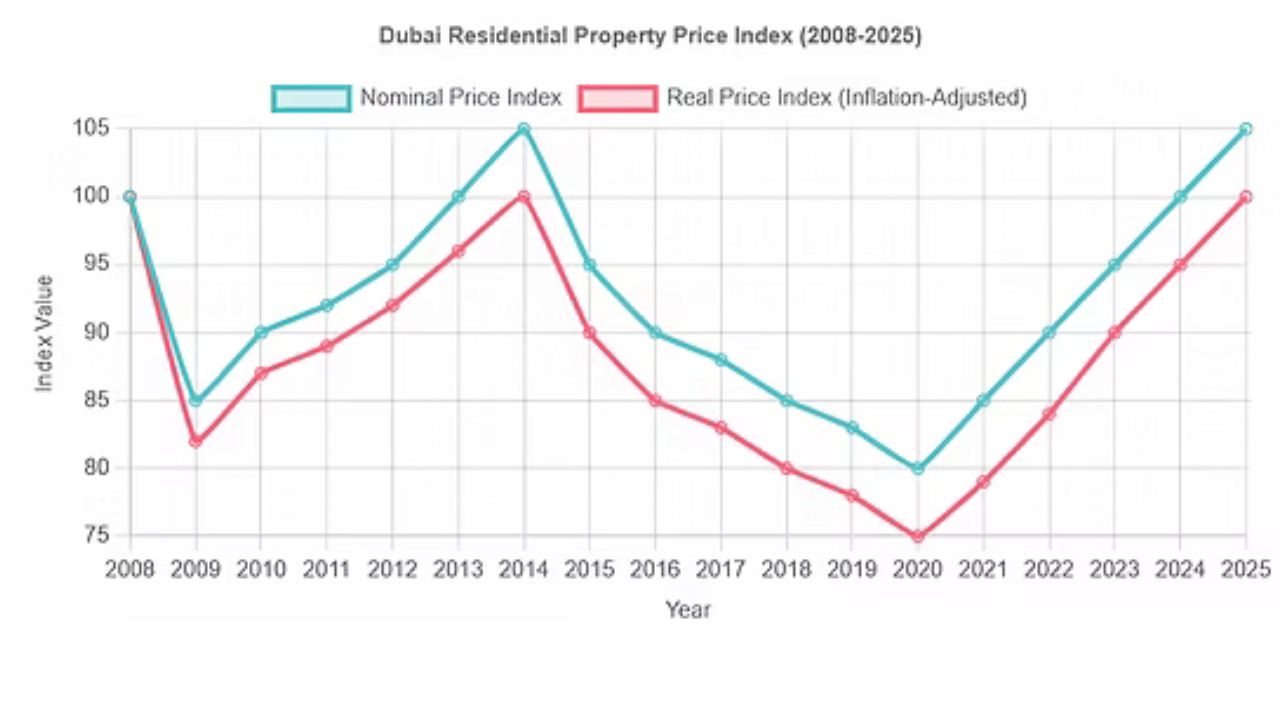
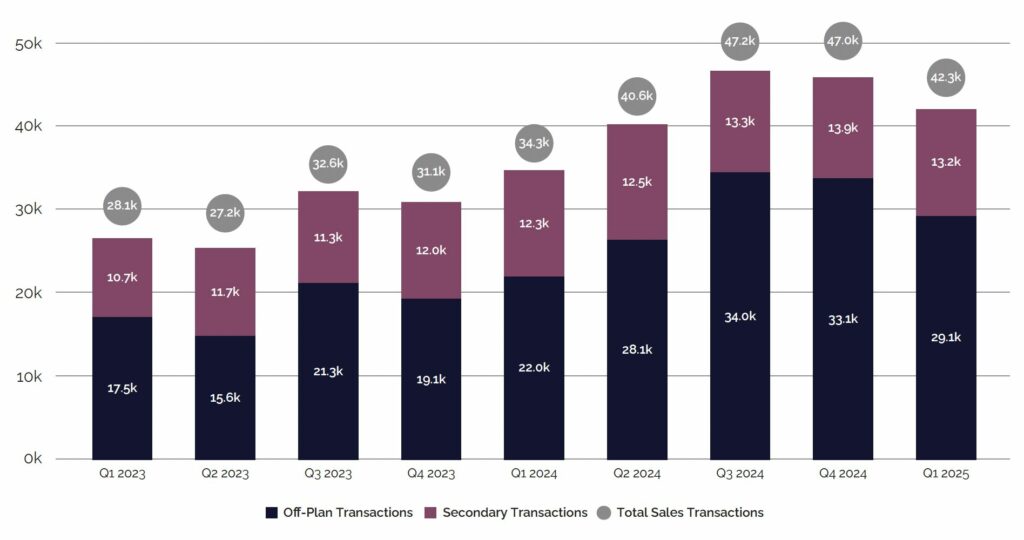
The two markets sit at different points in their investment arcs. Dubai’s values ran fast from 2022 onward, supported by unprecedented inflows and marquee project pipelines. As 2025 advances, high handover volumes and moderating rent growth raise the risk of near-term price softness in some segments. Meanwhile, Northern Cyprus is scaling from a lower base: improving air connectivity, strong lifestyle migration, and coastal amenity build-outs underpin a rental story with catch-up appreciation potential.
Dubai — Visual Pulse




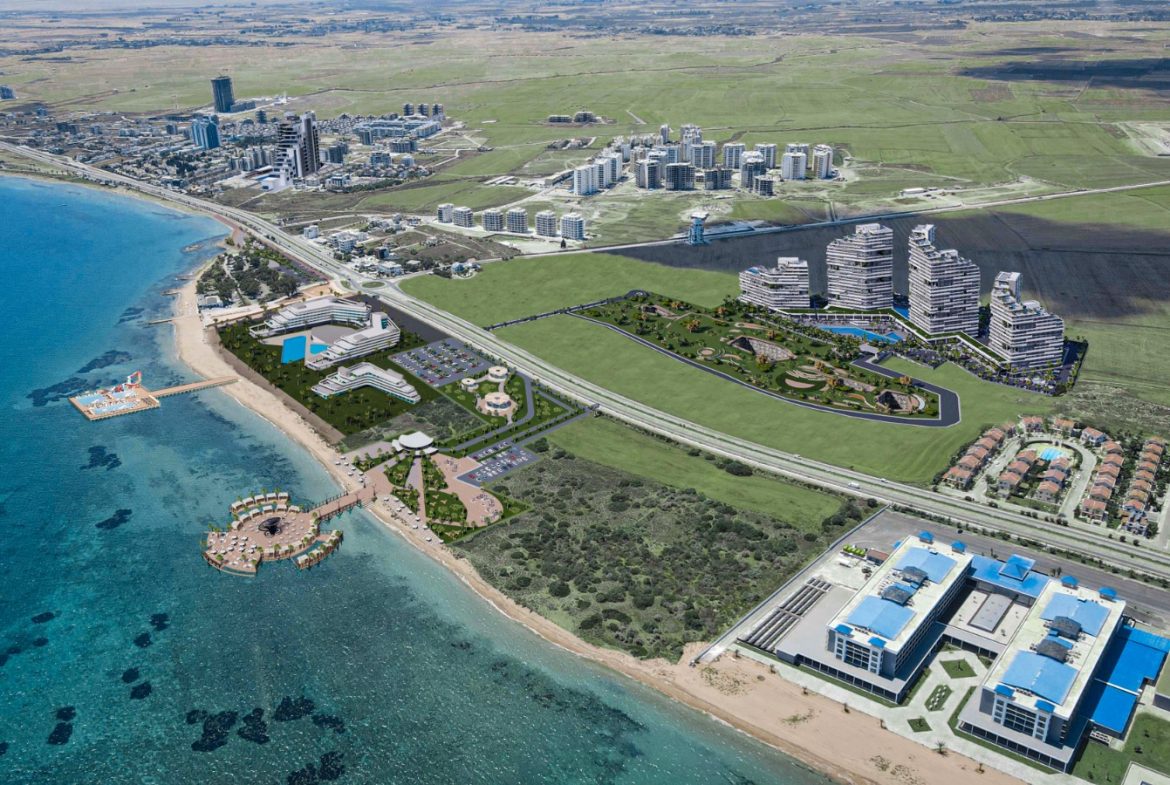
Northern Cyprus (TRNC) — Visual Pulse





Prices, Yields, and Liquidity — Where the Math Favors TRNC
Entry price dictates both yield and capital growth. Dubai’s prime districts command significant € per m², reducing the percentage appreciation available from here unless rental growth re-accelerates. TRNC’s lower ticket sizes allow investors to target higher gross yields and capture a larger share of future appreciation as infrastructure and tourism deepen.
| Criterion | Dubai | Northern Cyprus (TRNC) |
|---|---|---|
| Typical Entry Prices (€/m²) | High in prime/mid-prime; trophy assets at global-city levels | 1,800–3,500 in coastal sub-markets (varies by title, amenities) |
| Gross Yields | ~5–7% (apartments), ~4.5–6% (villas), moderating rent growth | ~7–10% in well-located stock; double-digit in some resort schemes |
| Liquidity | Deep, fast; transparent data and broad buyer pool | Thinner; plan exits with longer marketing periods |
| Cycle Position | Late-cycle; heavy handovers in 2025–26 | Earlier growth phase; catch-up potential in select pockets |
| Risk Emphasis | Supply & yield compression | Title/legal diligence; political status |
Bottom line: TRNC’s lower base and improving demand provide more room for percentage gains, while Dubai’s outperformance is already priced into many assets — leaving less upside unless you time sub-markets precisely.
Legal and Title: The TRNC Risk You Must Respect — and Can Manage
TRNC’s legal framework draws on British Common Law and is navigable with the right counsel. The decisive factor is title category. A disciplined investor prioritizes Pre-74 Turkish/British title where feasible, and applies enhanced diligence to Exchange (Eşdeğer) or TMD (Allocation) assets, pricing perception discounts into target yields. The process includes Permission to Purchase (PtP), contract stamping with the Tax Office, and the use of escrowed stage payments until approvals are in place.
Quick Diligence Checklist (TRNC)
- Independent counsel (conflict-free) to verify title chain, encumbrances, planning/zoning, and utilities.
- PtP application early; confirm any distance constraints to restricted/military/forest areas.
- Contract stamping and escrow discipline; milestone releases tied to approvals and inspections.
- Exit-timeline underwriting; prefer coastal/university/amenity-adjacent units with durable rental demand.
Residency, Lifestyle, and Ownership — Converting ROI into Real Life
Ownership in TRNC typically enables the owner to apply for multi-year residence permits, subject to prevailing rules and documentation. This, plus the Mediterranean lifestyle, English-speaking communities, and comparatively low living costs, tilts the lifestyle-to-return ratio in TRNC’s favor. Dubai’s visa tracks are robust but often come with higher cost-of-compliance, and prime urban living commands a premium in service charges and daily expenses.
Demand Drivers: Tourism, Infrastructure, and the “Catch-Up” Effect
TRNC tourism has expanded steadily, strengthening short-let economics in Kyrenia and Iskele/Long Beach and supporting mid-term rentals in Famagusta (university cluster). The new Ercan terminal improves throughput capacity and traveler experience. While routing through Türkiye remains standard, the practical impact for occupancy is positive. Pair this with marina and promenade upgrades, resort-class amenities, and modern low-rise beachfront stock, and you get a durable engine for both yield and price discovery.
Scenario Planning 2025–2030 — What Sensible Modeling Looks Like
Dubai — Stabilized Apartment (Illustrative)
- Entry yield: ~5.5% gross
- Rent CAGR: ~1.5–2.0% over 5 years (post-boom normalization)
- Price path: Flat to −5% over next ~24 months due to handovers; modest recovery thereafter
- IRR driver: Income > capital gains; manage LTV and micro-market concentration
TRNC — Coastal Apartment, Pre-74/Verified Exchange (Illustrative)
- Entry yield: ~6.5–8.0% gross (seasonality-adjusted)
- Rent CAGR: ~2.0–3.0% with tourism growth
- Price path: +10–25% over 5–7 years in outperforming pockets (amenities + coastal adjacency)
- IRR driver: Yield + selective appreciation; mitigate title/legal risk via counsel & PtP
Who Should Invest Where?
| Investor Profile | Dubai Fit | TRNC Fit | Notes |
|---|---|---|---|
| Capital-preservation with brand/liquidity preference | Strong | Moderate | Dubai’s depth and velocity are unmatched; time your sub-market. |
| Yield-seeker, mid-ticket sizes | Moderate | Strong | TRNC’s lower capital values allow healthier going-in yields. |
| Growth-oriented, 5–10 year horizon | Moderate | Strong | Catch-up appreciation + income in select coastal pockets. |
| Flip traders, short duration | Strong | Moderate/Weak | Dubai’s velocity helps flips; assess late-cycle risks. |
| Compliance-sensitive institutions | Strong | Weak/Moderate | TRNC’s title & status are hurdles for institutional mandates. |
Persuasive takeaway: TRNC is a strategic addition for private investors seeking yield and long-term upside. Dubai remains a world-class market — but 2025 favors patient capital focused on value rather than velocity.
Hand-picked coastal and urban listings with vetted titles, clear rental theses, and realistic yield models.
Browse TRNC Apartments
Browse TRNC VillasTalk to an Expert
Request a private briefing and we’ll map your budget to the right micro-markets and titles.
Request Your Investment Brief
Investor FAQs
Is Dubai or TRNC better for rental yields in 2025?
Dubai apartment yields often sit in mid-single digits due to higher entry prices and moderating rent growth. TRNC can offer higher gross yields from lower capital values and rising seasonal demand. Actual results depend on micro-location, unit mix, and title class.
What is the main risk in TRNC?
Title and political status. Prioritize Pre-74 Turkish/British title where available; for Exchange/TMD, use enhanced diligence, PtP, stamped contracts, and independent counsel. Price any perception discount into your target yield.
Will Dubai prices soften?
Heavy handovers in 2025–26 raise the probability of near-term softening. Use conservative LTVs, target durable sub-markets, and stress-test rents.
Does buying in TRNC grant residency automatically?
No. Ownership allows you to apply for multi-year residence permits, subject to current rules and documentation.
Who should consider TRNC over Dubai?
Yield-seekers and growth-oriented investors with mid-sized tickets and 5–10 year horizons who accept title diligence and calmer exit timelines.
We cover Mediterranean real estate with a focus on Northern Cyprus (TRNC). Our notes follow Google News standards: original analysis, transparent bylines, and clear sourcing. For press and partnerships, contact
info@cyprusprimeproperty.com.
YouTube
X (Twitter)
Matching the Market to the Investor
Comparisons between Dubai and Northern Cyprus often end in a verdict, but the more useful outcome is a match. These are structurally different propositions serving different investor profiles, and the “better” market is simply the one that fits your constraints.
Dubai suits investors who prioritise liquidity, institutional depth, world-class connectivity and a large, mature rental market with professional management infrastructure. Entry prices are considerably higher, service charges are significant, and competition among landlords is intense — but you can generally buy and sell with confidence that a market exists on both sides of the transaction.
Northern Cyprus suits investors with a longer horizon who want a substantially lower entry point, modest running costs, a Mediterranean lifestyle component and rental demand concentrated in resort corridors. In exchange you accept a non-EU legal framework, no European mortgage financing, thinner resale liquidity and the need for genuinely careful title due diligence.
Put simply: if you may need your capital back within a short window, the depth of Dubai’s market is worth paying for. If you can hold for the medium to long term and want more property and more lifestyle per unit of capital, Northern Cyprus makes a strong case.
Costs Beyond the Purchase Price
Like-for-like comparison requires looking past the headline figure in both markets. In Northern Cyprus, budget for stamp duty of roughly 0.5%, VAT of around 5%, and a title deed transfer fee of approximately 6% — often reduced for a first purchase in your own name — plus independent legal fees and furnishing. Ongoing costs include site or communal maintenance, utilities, insurance and, for rentals, management and cleaning.
TRNC-sourced rental income is taxed progressively, broadly in the 10%–37% range depending on the amount, with deductions affecting the effective rate. Dubai’s cost structure differs in composition — with its own registration fees, service charges and, since 2023, corporate tax rules affecting certain structures — so compare total cost of ownership and realistic net yield rather than gross headline percentages in either market.
Frequently Asked Questions
Which is the better investment, Dubai or Northern Cyprus?
Neither is universally better. Dubai offers liquidity, market depth and connectivity at a higher entry price. Northern Cyprus offers a much lower entry point, lower running costs and lifestyle value, with thinner resale liquidity and a non-EU legal framework. Match the market to your horizon and capital needs.
Is Northern Cyprus really tax-free like Dubai?
No, and neither is entirely tax-free. TRNC purchases attract stamp duty (~0.5%), VAT (~5%) and a title deed transfer fee (~6%), with rental income taxed progressively at roughly 10%–37%. The genuine advantage is a low, simple burden plus foreign income not remitted into the TRNC generally being untaxed locally. Your home country will usually still tax worldwide income in both cases.
How much cheaper is Northern Cyprus?
Substantially, though the multiple varies by location, specification and construction stage. Rather than relying on averages, compare current live listings for genuinely equivalent properties — beachfront resort units against beachfront resort units — since headline market averages mix very different product types.
Can I get a mortgage in either market?
Financing options exist in Dubai for qualifying buyers. In Northern Cyprus, European bank mortgages secured against local property are generally unavailable, so most purchases are funded from capital or via developer payment plans. This is one of the most significant practical differences between the two.
Which has better rental demand?
Dubai has a large year-round rental market with professional management infrastructure and high competition. Northern Cyprus has strong but more seasonal holiday-rental demand concentrated in resort corridors such as Long Beach, plus longer-term demand around university towns. Model occupancy honestly for whichever you choose.
Which is easier to sell?
Dubai, clearly. Its resale market is deeper and more liquid. In Northern Cyprus, resale can take longer, particularly where many similar units from one development reach the market simultaneously. Plan a longer holding period accordingly.
What about legal security?
Dubai has a well-established property registration framework. In Northern Cyprus, security depends heavily on the title deed category attached to your specific property, which makes independent legal verification essential. Read our guide on buying property safely in North Cyprus before proceeding.
Can I own property outright as a foreigner in Northern Cyprus?
Foreign nationals can own property, subject to permissions and limits that apply to purchases in an individual’s name. Your lawyer should confirm the current position for your specific situation before you commit, as rules and processing practice change over time.
Important Note
This article compares markets using general information and is not investment, tax or legal advice. Prices, tax rules and regulations in both jurisdictions change, and figures are indicative. Past performance is not a reliable indicator of future results. Obtain independent legal advice in the relevant jurisdiction and tax advice in your country of residence before investing.




Join The Discussion