
Mallorca averages around €5,228 per square metre for resale property in 2026, while comparable new-build apartments in Northern Cyprus regions such as Kyrenia and Iskele typically sell for a fraction of that figure. Both islands offer genuine Mediterranean lifestyle, strong sunshine, and coastal living — but the numbers behind price, tax, cost of living, and climate tell very different stories. This article compares both destinations honestly, using current published data, so you can weigh the real trade-offs before deciding where your budget takes you further.
Property prices: the headline difference
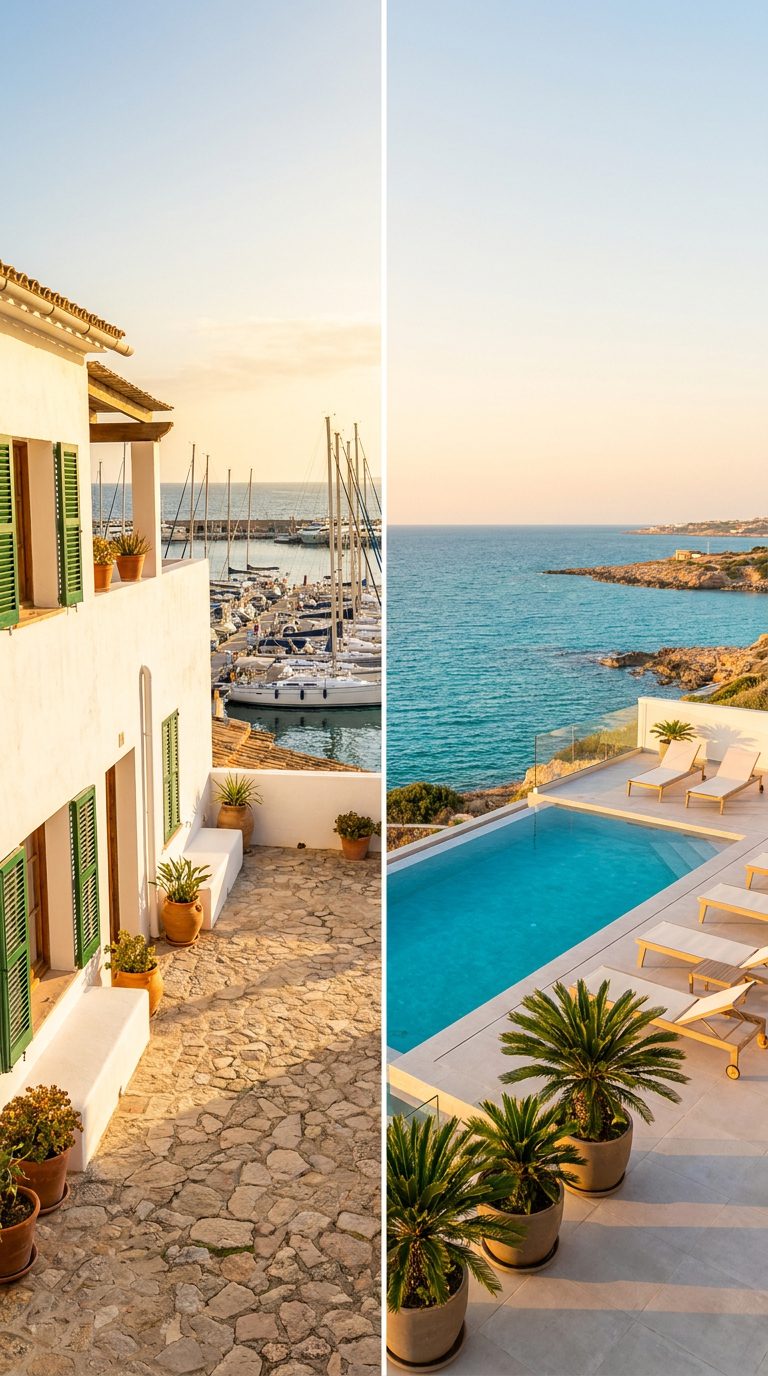
Mallorca remains one of the strongest and most stable property markets in Europe. According to multiple 2026 market reports, resale property on the Balearic Islands averages approximately €5,228 per square metre, with houses around €4,688/m² and apartments around €4,960/m². In sought-after coastal and tourist-heavy zones, prices for holiday-oriented property have been reported well above €6,000–€6,700/m², and the market has shown continued upward pressure into 2026 due to limited buildable land and sustained international demand.
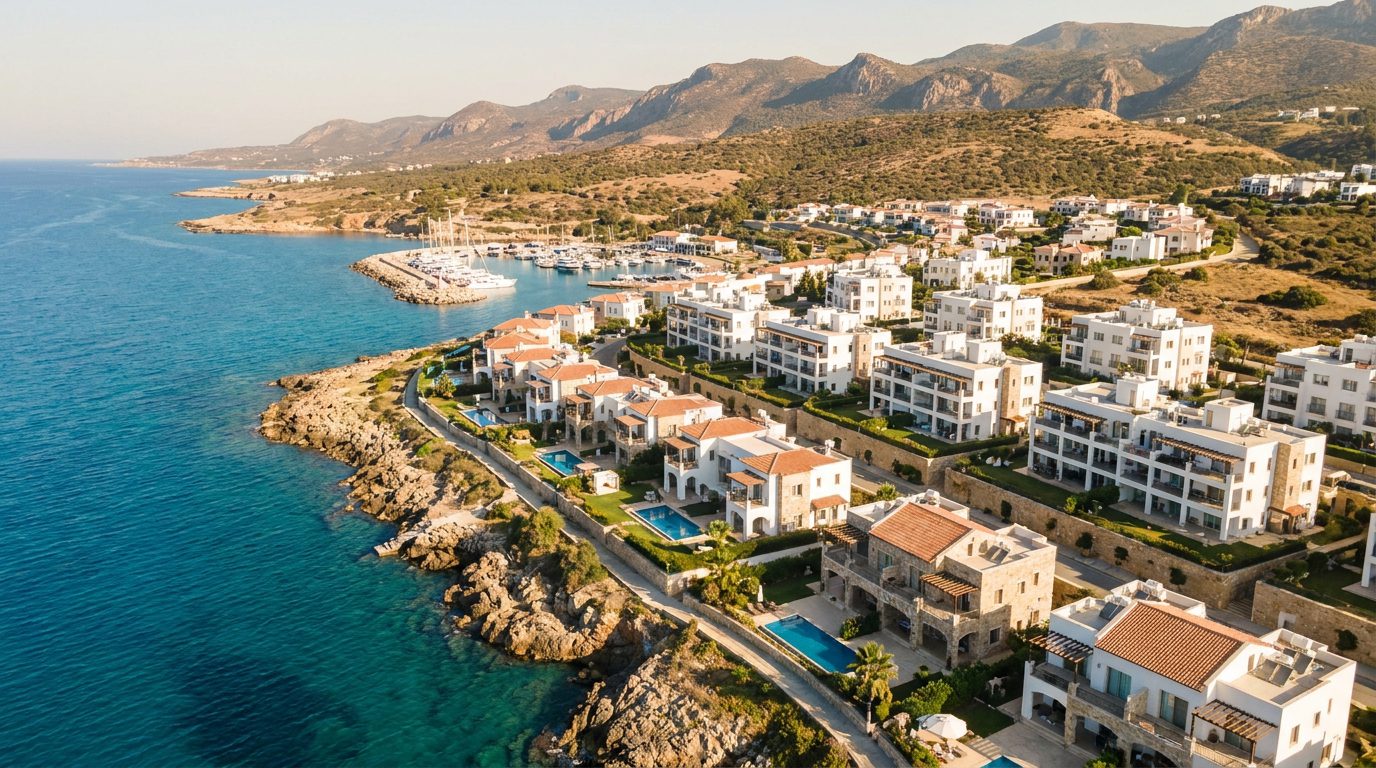
Northern Cyprus does not have an official government or central-bank property price index comparable to Spain’s. What we can say, based on current market listings for new-build developments in regions like Kyrenia (Girne), Esentepe, and Iskele, is that per-square-metre prices typically sit in a range that is a fraction of Mallorca’s average — often allowing buyers to secure a larger, newer apartment with sea proximity for a budget that would only cover a small, older unit on Mallorca. These figures are directional and vary by construction phase, distance to the sea, and developer quality, so prospective buyers should always request current, project-specific pricing rather than relying on general averages.
The practical result: for a comparable budget, buyers in Northern Cyprus frequently access significantly more living space, newer construction, and sea-adjacent locations than the same budget would secure on Mallorca.
Taxes: a real advantage, but not a “0% tax haven”
Tax is where claims about Northern Cyprus are most often exaggerated online, so it deserves a precise, sourced explanation rather than a slogan.
Spain / Mallorca: Non-resident sellers pay a flat 19% capital gains tax on profit from a property sale, with the buyer required to withhold 3% of the price at completion as a guarantee against this liability. Property transfer tax (ITP) on resale property ranges from 6% to 13% depending on the region, with the Balearics typically at the higher end of that range. New-build purchases are subject to 10% VAT plus stamp duty instead of ITP. Spain also applies imputed income tax on non-rented second homes (renta imputada) — a Spanish-specific rule that often surprises non-resident owners who assume an empty property generates no tax liability.
Northern Cyprus (TRNC): Personal income tax is progressive, ranging from 10% to 37% depending on income bracket. Income earned outside the TRNC that is not transferred into the country is generally not subject to local taxation — this is the real, verifiable tax advantage, not a blanket “0% tax” claim. Purchase-side costs include stamp duty (approximately 0.5%), VAT (approximately 5%), and a title deed transfer fee (approximately 6%, often reduced for a buyer’s first property). There is no wealth tax structure comparable to Spain’s, and no equivalent to Spain’s imputed income tax on unrented second homes.
Honest conclusion: Northern Cyprus offers a meaningfully lighter ongoing tax structure for foreign-sourced, non-transferred income, and avoids Spain’s wealth tax and imputed-income rules on second homes. It is not a zero-tax jurisdiction, and any claim suggesting otherwise should be treated with scepticism. Both jurisdictions require case-by-case review with a qualified tax advisor, since outcomes depend heavily on individual residency status, income source, and transfer patterns.
Cost of living: a consistent gap
General cost-of-living data for Spain places a single person’s monthly budget (including rent) at roughly €1,800–€2,200, with Balearic Islands pricing typically at or above the national average due to tourism-driven demand on housing, dining, and services. Mallorca in particular sees seasonal price inflation during peak tourist months that affects rents, restaurants, and everyday services.
Northern Cyprus is widely regarded as one of the more affordable Mediterranean destinations for day-to-day living, with rents, groceries, and dining generally priced below Western European and Spanish coastal benchmarks. The gap applies not only to the initial property purchase but to ongoing monthly expenses — a relevant factor for retirees, remote workers, and long-term residents comparing total cost of living rather than purchase price alone.
Climate: both sunny, but winter tells the real story
Both islands enjoy genuine Mediterranean climates with hot, dry summers. Mallorca averages around 300 sunshine days per year with roughly 7.9 hours of sunshine daily, and summer highs around 31°C in July and August. Northern Cyprus reports a comparable or slightly higher 300–340 sunshine days annually, with up to 11 hours of sunshine per day during peak summer, and similar summer highs of 30–33°C.
The meaningful difference shows up in winter. Mallorca’s January average sits around 15°C during the day but drops to roughly 4°C at night, with occasional snowfall in mountain regions such as the Tramuntana. Northern Cyprus stays notably milder through winter, with daytime averages around 13–15°C and far fewer sharp temperature drops. For anyone planning to live on the property year-round rather than visit seasonally, this is a tangible quality-of-life difference, not just a marketing point.
Lifestyle, infrastructure, and legal context
Mallorca offers EU-standard infrastructure, an established legal framework for property buyers, and direct flight connections from most major European cities in roughly 2–2.5 hours. It is also, by a wide margin, more heavily touristed — which brings excellent amenities but also seasonal crowding, higher service prices in peak months, and a real-estate market shaped heavily by international holiday-home demand.
Northern Cyprus offers a quieter, less saturated coastal lifestyle, with infrastructure that is solid in core regions like Kyrenia and Iskele but less dense overall than Mallorca’s. It is not part of the European Union, which has concrete implications: different title deed structures, a separate legal due diligence process outside EU-standard buyer protections, and flight connections from Germany that typically require a stopover, extending travel time to roughly 4–5 hours. None of this makes a purchase inherently riskier than an EU purchase — but it does mean the transaction is structurally different and requires independent, locally qualified legal review rather than assuming EU-equivalent protections apply.
Which Northern Cyprus region compares best to Mallorca-style coastal living
Buyers comparing Mallorca to Northern Cyprus often ask which specific region offers the closest lifestyle match. A few regions stand out for different reasons:
- Kyrenia (Girne): The most established and infrastructure-rich coastal town in Northern Cyprus, with a historic harbour, marina, and the widest range of restaurants, healthcare, and international schools. This is the closest comparison to Mallorca’s Palma in terms of amenities and expat community density, though on a smaller scale.
- Esentepe: A quieter, more residential coastal area east of Kyrenia, popular for golf courses and larger villa plots, comparable to Mallorca’s more relaxed inland-coastal towns rather than its busiest tourist ports.
- Iskele / Long Beach: The fastest-growing new-build region, positioned near one of the island’s longest sandy beaches, with a high concentration of modern, master-planned apartment developments — closer in spirit to a newer resort development than Mallorca’s centuries-old towns.
None of these regions replicate Mallorca’s exact infrastructure density, and that is precisely the trade-off: less saturation and lower prices in exchange for a market that is still maturing in some areas.
A practical look at the purchase process in each market
Buying property in Spain follows an EU-standard process: a reservation deposit, a private purchase contract (often with a notary and lawyer involved), due diligence on the property’s legal status via the Land Registry (Registro de la Propiedad), and a final signing before a notary with title registration shortly after. Non-resident buyers typically need a Spanish NIE tax identification number before completing a purchase.
Buying property in Northern Cyprus follows a different structure: a reservation deposit secures the unit, followed by independent legal review of the specific title deed type and the sales contract — critical because not all TRNC title deed categories carry the same legal certainty. The contract is typically registered with the Land Registry to protect the buyer’s interest during the process, payments for new-build purchases are usually staged across the construction timeline, and final title transfer follows completion and full payment. Engaging a locally qualified lawyer who is independent from the seller or developer is essential at every stage, since TRNC’s legal framework operates outside EU consumer protection standards.
Neither process is inherently riskier than the other, but they are structurally different — and treating a Northern Cyprus purchase as if it followed Spanish/EU rules would be a mistake buyers should actively avoid.
Who each destination suits best
Neither Mallorca nor Northern Cyprus is the objectively “better” choice — the right answer depends on individual priorities. Buyers who value EU legal certainty, dense infrastructure, short flight times, and an established international real estate market will likely find Mallorca’s higher price point justified by lower structural risk and easier logistics. Buyers prioritising maximum space and budget efficiency, a milder year-round climate, lower ongoing living costs, and a quieter, less saturated coastline will often find Northern Cyprus the more compelling option — provided they commit to the same level of legal due diligence that any serious international property purchase requires, regardless of destination.
Frequently Asked Questions
Is Northern Cyprus really cheaper than Mallorca for buying property?
Yes, based on current published data. Mallorca’s average resale price sits around €5,228/m², while comparable new-build listings in Northern Cyprus regions are typically a fraction of that. Actual savings depend heavily on the specific project, region, and construction phase, so individual comparisons should always be based on current listings rather than averages alone.
Does Northern Cyprus really have no property taxes?
No. Northern Cyprus applies stamp duty (~0.5%), VAT (~5%), and a title deed transfer fee (~6%) on property purchases, plus progressive personal income tax of 10-37% on TRNC-sourced income. The real tax advantage is that foreign-sourced income not transferred into the TRNC is generally not locally taxed — a meaningful but specific benefit, not a blanket tax-free claim.
Is Northern Cyprus part of the European Union?
No. Northern Cyprus (the TRNC) is not an EU member state, unlike Spain and the Republic of Cyprus. This affects legal processes, title deed types, and buyer protections, and makes independent legal due diligence especially important before any purchase.
Which destination has better weather for year-round living?
Both offer genuine Mediterranean climates with similar hot, dry summers. The main difference is winter: Mallorca’s nights can drop to around 4°C with occasional mountain snowfall, while Northern Cyprus stays milder, typically around 13-15°C during the day through winter — a relevant factor for anyone planning to live on-site year-round rather than visit seasonally.
Is it cheaper to live in Northern Cyprus than on Mallorca long-term?
Generally, yes, according to published cost-of-living comparisons — Northern Cyprus is widely regarded as one of the more affordable Mediterranean destinations, while Mallorca’s tourism-driven demand pushes up rents, dining, and services, especially in peak season. Individual costs still depend heavily on lifestyle, location, and personal circumstances, so a case-by-case budget comparison is recommended.
The bottom line
For buyers weighing Mallorca against Northern Cyprus, the price and cost-of-living gap is real and well-documented — often 2 to 3 times lower per square metre in Northern Cyprus, combined with generally lower day-to-day living costs and a genuinely lighter tax structure for foreign-sourced income. Mallorca counters with EU-standard legal protection, denser infrastructure, and far shorter flight times from Germany. Neither destination is automatically “better” — the right choice depends on whether you prioritise EU legal certainty and connectivity, or space, budget efficiency, and a quieter Mediterranean lifestyle.
Property prices, tax rules, and market conditions change, and figures in this article reflect publicly available data as of July 2026. This article is intended for general orientation only and does not constitute investment, legal or tax advice. Prospective buyers should seek independent legal and financial advice specific to their situation before making any property decision.
Explore current property opportunities across Northern Cyprus at CyprusPrimeProperty.com.



Join The Discussion